
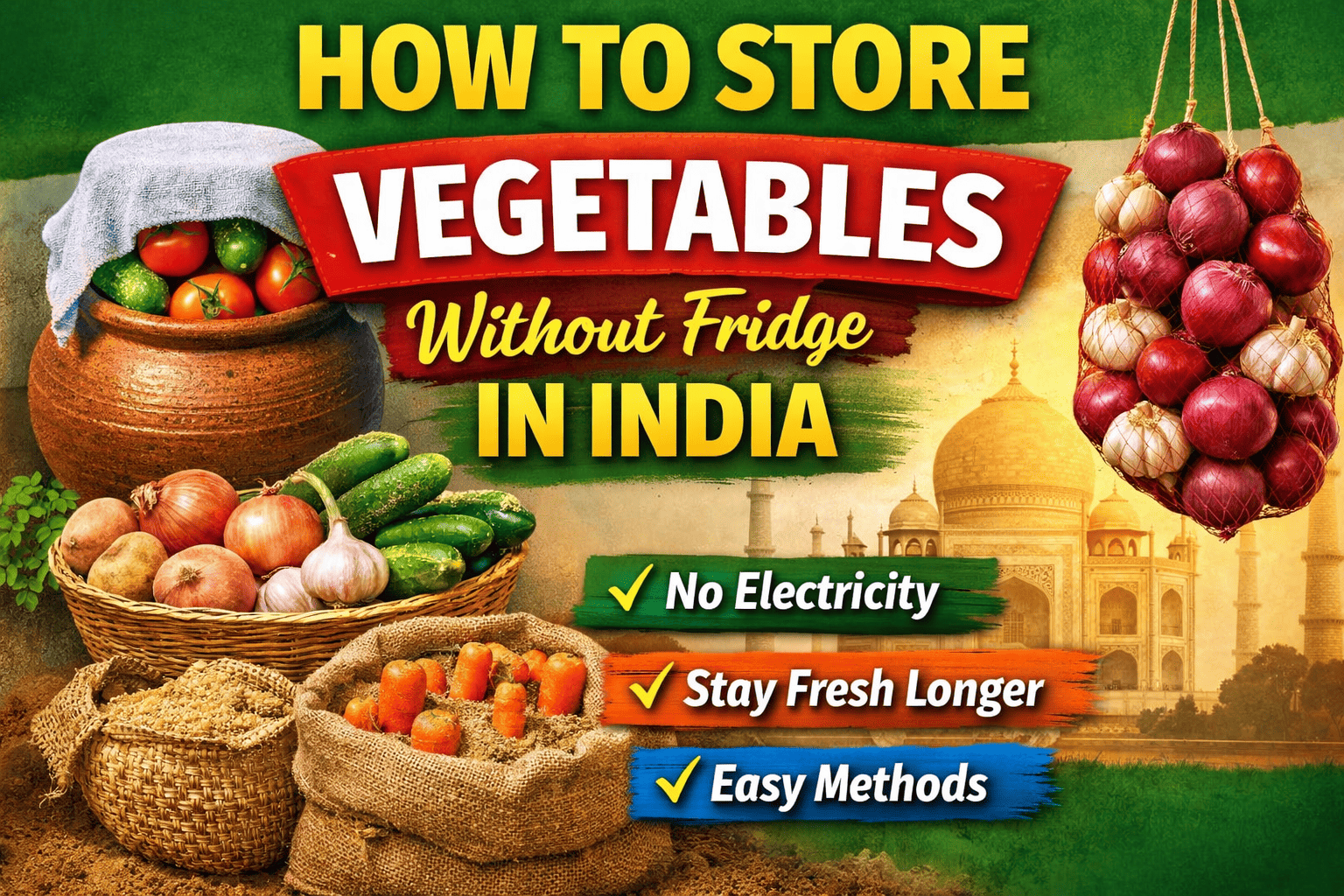
Keeping vegetables fresh without a refrigerator can feel difficult, especially in India’s warm and humid climate. In many homes, vegetables start losing their freshness within a day, leading to unnecessary waste and extra expense.
However, a fridge isn’t the only solution.
Long before refrigerators became common, Indian households used simple and practical methods to store vegetables and keep them fresh for longer. These techniques are not only effective but also perfectly suited to the Indian climate.
So In this blog, you’ll discover practical and proven ways to store vegetables without a fridge in India, explained in a simple and easy-to-follow manner. Whether you want to save electricity, reduce food waste, or simply use smarter storage methods, these tips will help you keep your vegetables fresh for longer — naturally and efficiently.
How to Store Vegetables Without Fridge in India
1. Store Vegetables in a Cool, Dark, and Well-Ventilated Area
One of the simplest yet most effective ways to store vegetables without a fridge is by choosing the right location inside your home. Many people focus only on the container or method, but the environment where you store vegetables plays an equally important role.
When vegetables are exposed to heat and direct sunlight, they tend to lose moisture quickly and spoil faster. On the other hand, a cool and well-ventilated space helps slow down this process and keeps them fresh for longer.
How to do it:
To make this method work effectively, try to store your vegetables in the coolest part of your house, away from direct sunlight and heat sources like stoves. Instead of closed containers, use open baskets, bamboo trays, or crates; this ensures proper airflow and prevents moisture accumulation.
Best vegetables for this method:
This method works particularly well for vegetables like potatoes, onions, garlic, and pumpkins. However, one important thing to remember is to avoid storing potatoes and onions together, as this can speed up spoilage.
2. Traditional Matka (Earthen Pot) Method
If you are looking for a natural cooling solution, the traditional matka method is one of the most reliable options. This technique has been used in Indian households for generations and is especially useful during hot weather.
The reason this method works so well lies in the nature of clay pots. Earthen pots are slightly porous, which allows water to evaporate from their surface. This evaporation creates a natural cooling effect inside the pot, helping maintain a lower temperature compared to the surrounding environment.
How to do it:
To use this method, place your vegetables inside a clean clay pot and cover it with a lid or a damp cloth. For even better cooling during summer, lightly sprinkle water on the outer surface of the pot once or twice a day and keep the pot in a shaded and well-ventilated area for best results.
Best vegetables for this method:
This method is ideal for vegetables like tomatoes, brinjal, cucumbers, and capsicum.
3. Damp Cloth Method for Leafy Vegetables
Leafy vegetables are among the most delicate and tend to spoil faster than other types. Without proper storage, they can quickly become dry, wilted, and unusable.
This happens because leafy greens lose moisture very quickly when exposed to air. To prevent this, they need a method that helps retain just the right amount of moisture without making them too wet.
How to do it:
A simple and effective solution is to wrap them in a slightly damp cloth. This helps maintain their natural moisture and slows down the drying process.
To do this properly, take a clean cotton cloth, dampen it lightly, and wrap the vegetables gently. Store them in a cool place and check them daily to ensure the cloth remains slightly moist.
Best vegetables for this method:
This method works well for spinach, coriander, and fenugreek, helping them stay fresh for a longer time compared to leaving them exposed.
4. Sand Storage Method for Root Vegetables
Root vegetables require a different approach because they naturally grow underground and are used to stable conditions. When left in open air, they tend to lose moisture and become soft over time.
This is where the sand storage method becomes useful. It creates an environment similar to soil, helping maintain a balanced level of moisture and temperature.
How to do it:
To use this method, take a container or box and fill it with clean, dry sand. Place the vegetables inside without overcrowding, and cover them completely with sand.
Best vegetables for this method:
This technique works especially well for carrots, radish, beetroot, and turnips. It helps keep them firm, fresh, and usable for a longer period.
5. Hanging Storage Method
Another important factor in vegetable storage is airflow. When vegetables are kept in closed or crowded spaces, moisture tends to build up, which can lead to rotting.
The hanging storage method solves this problem by allowing air to circulate freely around the vegetables. This reduces humidity and helps prevent spoilage.
How to do it:
To use this method, place vegetables in mesh bags, jute bags, or baskets and hang them in a well-ventilated area of your kitchen.
Best vegetables for this method:
This method is especially effective for onions, garlic, and chilies, as these vegetables require dry conditions and good airflow to stay fresh.
6. Water Storage Method (Short-Term Solution)
Some vegetables, especially herbs, need moisture to stay fresh. Without it, they wilt quickly and lose their usability.
A simple way to handle this is by storing them in water, similar to how flowers are kept in a vase. This method helps maintain hydration and keeps them fresh for a short period.
How to do it:
To use this method, trim the stems slightly and place them in a container filled with clean water. Keep the container in a cool and shaded area, and change the water daily to prevent spoilage.
Best vegetables for this method:
This works best for coriander and mint and is ideal for short-term storage.
7. Newspaper or Banana Leaf Wrapping
Sometimes, protecting vegetables from excess moisture and heat is just as important as keeping them cool. Wrapping is a simple method that helps create a protective layer around vegetables.
Using materials such as newspapers or banana leaves helps absorb excess moisture, while also protecting the vegetables from direct exposure to air and heat.
How to do it:
To apply this method, wrap the vegetables loosely and store them in a cool place.
Best vegetables for this method:
This works well for cabbage, cauliflower, brinjal, and capsicum, helping them stay fresh for longer.
8. Keep Ethylene-Producing Vegetables Separate
Not all vegetables can be stored together, and this is something many people are not aware of.
Some fruits and vegetables release a natural gas called ethylene, which speeds up the ripening process. When stored together with other vegetables, this gas can cause them to spoil much faster.
Common ethylene producers include tomatoes, bananas, and apples.
To prevent unnecessary spoilage, it is best to store these items separately from other vegetables.
9. Avoid Washing Before Storage
A common mistake people make is washing vegetables before storing them. While it may seem like a good idea but it actually increases the chances of spoilage.
Water adds extra moisture to the surface of vegetables, which creates a favorable environment for bacteria and fungi to grow.
Instead, it is better to store vegetables in a dry condition and wash them only just before use.
10. Zero-Energy Cool Chamber (ZECC)
If you are looking for a more advanced and long-term solution, the zero-energy cool chamber is one of the most effective methods available.
This method works on the principle of evaporation, where water helps lower the temperature inside a small storage structure made of bricks and sand.
It is widely used in rural areas and by farmers to store vegetables without electricity.
The biggest advantage of this method is that it can keep vegetables fresh for several days, even in hot weather, without the need for refrigeration.
Common Mistakes That Cause Vegetables to Rot Faster
Avoid these if you want longer freshness:
- Storing in sealed plastic bags
- Keeping vegetables in sunlight
- Mixing all vegetables together
- Ignoring spoiled vegetables
- Overcrowding storage space
By avoid these mistakes you can slow down the vegetables rot process
Best Clay Water Camper with 2 Glass Containers:-https://amzn.to/42hMT2C
Pro Storage Tips
- Always check vegetables daily and remove spoiled ones
- Keep storage areas clean and dry
- Use breathable containers instead of plastic
- Store vegetables according to their type (leafy, root, dry, etc.)
Read More:- Best Mixer Grinder Under 3000
Why Proper Vegetable Storage Matters (Especially Without a Fridge)
Storing vegetables properly is not just about keeping them fresh for a longer time — it directly affects their quality, taste, nutrition, and safety.
In India’s climate, where temperatures can rise quickly and humidity levels are often high, vegetables can start spoiling much faster if they are not stored correctly. In many cases, improper storage can lead to visible spoilage within just 24 hours.
This is exactly why understanding proper storage methods becomes so important. When vegetables are stored the right way, you can significantly slow down spoilage, preserve their freshness, and make better use of your groceries.
To understand this more clearly, let’s look at the key reasons why proper vegetable storage matters:
1. Prevents Rapid Nutrient Loss
Vegetables are rich in essential nutrients like vitamins, minerals, and antioxidants. However, once they are harvested, they slowly begin to lose these nutrients over time.
Poor storage conditions — especially heat and direct sunlight — can speed up this process.
For example:
- Leafy greens can lose freshness and nutrients very quickly if left exposed
Proper storage helps slow down this natural nutrient loss, allowing you to get maximum health benefits from your vegetables.
2. Reduces Spoilage and Food Waste
One of the biggest problems in Indian households is vegetable wastage.
When vegetables are not stored correctly:
- They lose moisture and become dry
- Or they retain too much moisture and start rotting
- Fungal growth and bad odor develop quickly
This not only wastes food but also increases your overall grocery expenses.
By using proper storage techniques, you can:
- Extend the shelf life of vegetables
- Reduce the frequency of buying fresh produce
- Save money in the long run
3. Controls Moisture Levels (Key to Freshness)
Moisture plays a critical role in how long vegetables stay fresh.
- Too little moisture → vegetables dry out and shrink
- Too much moisture → promotes bacterial and fungal growth
The goal is to maintain a balanced moisture level, depending on the type of vegetable.
For example:
- Leafy vegetables need slight moisture to stay fresh
- Onions and garlic require dry conditions
Understanding this balance is essential for storing vegetables effectively without a fridge.
4. Slows Down Natural Ripening and Decay
Even after being harvested, vegetables continue to take in oxygen. This natural process, known as respiration, slowly leads to ripening and eventually causes them to spoil.
In warm temperatures:
- This process speeds up
- Vegetables spoil faster
Proper storage methods help:
- Slow down respiration
- Delay ripening
- Extend usability
This is especially important when you are storing vegetables without refrigeration.
5. Prevents Bacterial and Fungal Growth
Warm and humid conditions create an ideal environment for bacteria and fungi to grow.
Improper storage — such as keeping vegetables in sealed plastic bags or damp areas — can lead to:
- Mold formation
- Bad smell
- Slimy texture
Proper ventilation, dryness (when needed), and cleanliness help reduce these risks significantly.
6. Maintains Taste and Texture
Fresh vegetables are not just about appearance — their taste and texture also matter.
Improper storage can cause:
- Wilting of leafy vegetables
- Root vegetables to become soft or rubbery
- Other vegetables to lose their natural flavor
Good storage practices help preserve:
- Crispness
- Natural flavor
- Overall cooking quality
7. Helps You Store Vegetables According to Their Type
Not all vegetables behave the same way.
Different categories require different storage conditions:
- Leafy vegetables → need slight moisture and cooling
- Root vegetables → prefer dry and stable conditions
- Bulbs (onion, garlic) → require airflow and dryness
Proper storage means understanding these differences and treating each type accordingly.
Read More:- Easy Chicken Biryani Recipe
Conclusion
Learning how to store vegetables without a fridge in India is not just useful — it’s essential for saving money, reducing waste, and living more sustainably.
By combining traditional Indian methods with smart storage practices, you can easily keep your vegetables fresh without depending on electricity.
The key is simple:
👉 Control temperature
👉 Manage moisture
👉 Ensure airflow Master these three, and your vegetables will last much longer.
FAQS
What vegetables can last without refrigeration?
Several vegetables can stay fresh for days—or even weeks—without refrigeration, as long as they are stored properly in a cool, dry, and well-ventilated place.
Vegetables that naturally have a lower water content or protective outer layers tend to last longer without a fridge. These include:
- Potatoes – Can last 2–4 weeks when kept in a dark, cool place
- Onions – Stay fresh for several weeks if stored with good airflow
- Garlic – Has a long shelf life when kept dry
- Pumpkin – Can remain fresh for weeks due to its thick outer skin
- Sweet potatoes – Store well in dry, ventilated areas
- Raw bananas – Can last a few days at room temperature
These vegetables are more resistant to heat and moisture compared to delicate ones.
On the other hand, vegetables like leafy greens, tomatoes, and cucumbers are more sensitive and usually have a shorter shelf life without refrigeration. However, with proper storage methods (like damp cloth or matka method), even these can stay fresh for a few extra days.
The key is to understand the nature of each vegetable and store it accordingly. When stored in the right conditions, many vegetables can last much longer than most people expect—even without a refrigerator.
What two foods never spoil?
Two foods that are widely known for their extremely long shelf life are honey and salt. When stored properly, both can remain usable for a very long time without spoiling.
Honey is unique because it has very low moisture and a naturally acidic nature, which prevents the growth of bacteria. Over time, honey may crystallize, but this does not mean it has gone bad—it can easily be restored by gently warming it.
On the other hand, Salt is a natural mineral that does not support bacterial growth. Since it does not contain moisture or organic matter, it does not spoil in the usual sense.
Even though these foods last for a very long time, proper storage is still important:
- Keep them in airtight containers
- Protect them from moisture and contamination
Unlike these foods, most fresh vegetables have a limited shelf life. That’s why using proper storage methods becomes essential to keep them fresh for as long as possible without refrigeration.